Drone Inspection Services in India: Applications, Benefits & How to Hire
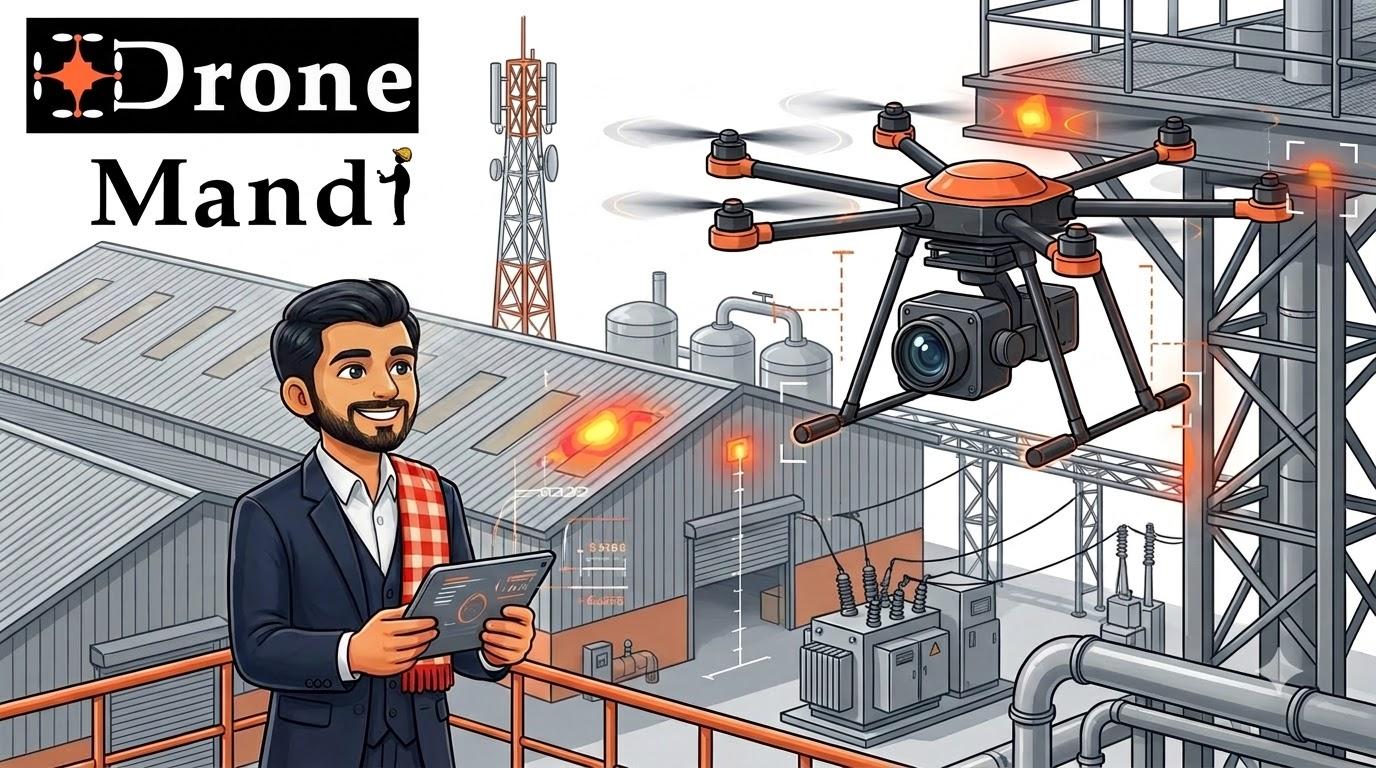
Drone Inspection Services in India: Applications, Benefits & How to Hire
Inspecting a building, tower, roof, industrial facility or large infrastructure asset can be time-consuming, expensive and sometimes dangerous when done entirely through traditional methods.
Drone inspection services are changing how businesses collect visual information from difficult-to-reach locations. A professional drone can capture high-resolution photographs, videos and, depending on the equipment and project, thermal or other specialized data without requiring inspectors to physically access every part of a structure.
What Are Drone Inspection Services?
Drone inspection is the process of using an unmanned aircraft equipped with cameras or specialized sensors to examine a physical asset or structure from the air.
Instead of sending personnel to every difficult or elevated location, a drone can be flown around the asset to capture detailed imagery from multiple angles.
The resulting data can then be reviewed by the relevant technical team, inspector, engineer or asset owner depending on the purpose of the project.
A drone inspection can range from a straightforward visual documentation job to a highly technical inspection involving specialized cameras, mapping, thermal imaging or detailed measurements.
Why Are Businesses Using Drones for Inspections?
Traditional inspections can involve scaffolding, lifts, rope access, ladders, shutdowns or teams physically entering difficult areas. These approaches can still be necessary for certain inspections, but drones can reduce the amount of physical access required for the initial assessment or visual documentation.
The biggest advantage is often simple: the drone can go where it is difficult, expensive or inconvenient for a person to go.
For example, a company may want to inspect a large warehouse roof after heavy weather. Instead of immediately arranging elevated access equipment, a drone can capture an initial visual assessment of the roof surface.
Similarly, a construction company can regularly document building facades, towers and other elevated structures without sending personnel to every level simply to collect progress imagery.
Common Applications of Drone Inspection in India
1. Building and Facade Inspection
Large commercial buildings, residential towers and institutional structures can have difficult-to-access facades.
Drone photography can capture high-resolution imagery of external walls, balconies, roofs and other visible surfaces. This can help teams identify areas that may require closer physical inspection.
Drone-based visual documentation can also create a useful record of the condition of a structure at a particular point in time.
2. Roof Inspection
Roof inspections are one of the practical applications of drones because large roofs can be difficult to inspect manually.
A drone can capture imagery across a roof while reducing the need for personnel to physically walk across the entire surface.
Potentially visible issues can include damaged roofing material, debris, standing water, visible deterioration and other surface-level conditions. Any findings requiring engineering confirmation should be evaluated by the appropriate qualified professional.
3. Telecom Tower Inspection
Telecommunication towers can be tall and difficult to access.
Drone inspection can provide detailed imagery of tower structures, antennas, cables and other visible components from different angles.
This can be particularly useful for maintenance planning and preliminary visual assessment.
4. Construction Site Inspection
Construction companies can use drones to regularly document project progress.
Instead of relying only on ground photographs, aerial imagery can show the complete site, surrounding areas, building elevations, material storage and overall construction progress.
Regular drone flights can create a visual timeline that helps project managers compare the site over different stages of construction.
5. Industrial Facility Inspection
Factories, warehouses, plants and other industrial facilities often contain large structures and elevated equipment.
Drones can help capture visual information from areas such as roofs, external structures, storage facilities, pipelines and other accessible components.
For specialized industrial inspections, the drone and sensor configuration should be selected according to the actual inspection requirement rather than simply choosing the most expensive drone.
6. Solar Panel Inspection
Solar installations can cover large areas, making manual visual inspection time-consuming.
Drones equipped with appropriate cameras can capture imagery across solar installations.
Thermal cameras can also be useful for certain solar inspection applications because temperature differences may reveal areas requiring further investigation.
Thermal data should be interpreted correctly and under appropriate operating conditions; the drone imagery itself does not automatically constitute a complete engineering diagnosis.
7. Power and Electrical Infrastructure
Drones can also be used to visually document certain electrical infrastructure and other difficult-to-access assets.
High-resolution imagery can help teams review visible components and identify areas that may require closer inspection.
Operations around electrical infrastructure require careful planning, appropriate equipment and professional flight procedures.
8. Bridges and Large Infrastructure
Bridges and other large infrastructure can contain sections that are difficult to inspect from the ground.
Drone imagery can provide a useful visual overview of structural surfaces and difficult-to-reach areas.
For infrastructure owners, repeated drone inspections can also help build a visual record over time.
9. Mining and Large Sites
Large mining and industrial sites can benefit from aerial inspection because of their scale.
Drones can capture imagery of slopes, stockpiles, roads, equipment areas and other site features.
When inspection is combined with surveying or mapping workflows, the same project may produce additional geospatial outputs.
What Can a Drone Capture During an Inspection?
The output depends on the drone, camera, flight plan and inspection requirement.
| Output | Typical Use |
|---|---|
| High-resolution photographs | Detailed visual documentation |
| 4K or high-resolution video | General visual inspection and documentation |
| Thermal imagery | Temperature-related inspection applications |
| Aerial overview imagery | Large-site assessment |
| Time-series imagery | Comparing asset condition over time |
| Mapping data | Large-area documentation and measurement workflows |
The important point is that an inspection should start with the question “What information do we need?” rather than simply “Which drone should we use?”
Drone Inspection vs Traditional Inspection
| Factor | Traditional Approach | Drone Inspection |
|---|---|---|
| Access | May require physical access equipment | Can provide aerial access to many visible areas |
| Large areas | Can require significant manpower | Can cover large visible areas efficiently |
| Elevated structures | May require ladders, lifts or other access methods | Drone can capture elevated imagery from a distance |
| Documentation | Often relies on manually collected photographs | Can generate systematic aerial imagery |
| Repeat inspections | Can be resource-intensive | Repeatable flight plans can support visual comparisons |
This does not mean drones completely replace traditional inspection methods.
In many cases, drones work best as an additional inspection tool. They can help teams understand the condition of an asset, identify areas requiring closer attention and reduce unnecessary physical access.
Benefits of Drone Inspection Services
Improved Access
A drone can capture imagery from elevated or difficult-to-reach areas without requiring the drone operator to physically access the structure.
Faster Visual Documentation
Large assets can often be visually documented more efficiently from the air than from multiple ground positions.
Reduced Exposure to Certain Access Risks
Where an inspection task involves difficult elevated access, aerial data collection can reduce the need for personnel to immediately access every visible area.
However, the drone operation itself must also be planned safely and legally.
Better Documentation
High-resolution imagery provides a visual record that can be reviewed later and shared with relevant teams.
Repeatable Monitoring
For construction sites, industrial facilities and other assets, recurring drone flights can create a useful timeline of visual changes.
Access to Specialized Sensors
Depending on the project, drones can carry specialized cameras such as thermal systems and other payloads.
How Much Do Drone Inspection Services Cost in India?
There is no single nationwide price for drone inspection services in India.
A basic visual inspection of a small property is very different from a thermal inspection of a large industrial facility or a detailed infrastructure inspection requiring specialized equipment and data processing.
| Inspection Type | Typical Pricing Consideration |
|---|---|
| Basic visual inspection | Usually depends on location, asset size and flight duration |
| Large building inspection | Depends on building size, access and required imagery |
| Industrial inspection | Depends on asset complexity and equipment |
| Thermal inspection | Generally costs more because of specialized equipment and analysis |
| Large infrastructure inspection | Usually quoted project-by-project |
| Recurring inspection | Can be structured as a periodic service depending on requirements |
For standard drone services, market pricing can vary significantly between cities, equipment classes, operators and project requirements. Advanced drones and specialized payloads generally cost more than basic camera-drone operations.
The best approach for an inspection project is to provide the service provider with the location, asset type, approximate size, inspection objective and required output before requesting a quotation.
What Determines the Cost of a Drone Inspection?
- Location: Travel requirements can affect the project cost.
- Asset size: Larger structures generally require more flight time and data.
- Inspection complexity: A simple visual check differs from a specialized inspection.
- Drone type: Professional and advanced platforms may cost more.
- Camera or sensor: Thermal and specialized sensors can increase the project cost.
- Data processing: Additional processing, reports or mapping may add to the quotation.
- Access conditions: Restricted, congested or difficult locations require additional planning.
- Travel: Projects outside the operator's normal operating area may involve travel charges.
- Frequency: Recurring inspection programs may be structured differently from one-time jobs.
Do You Need a Specialized Drone for Inspection?
Not always.
The correct drone depends on the inspection objective.
For basic visual documentation, a professional camera drone may be sufficient. For applications involving heat signatures, a thermal camera may be more appropriate. Large-area projects may require mapping capabilities, while highly specialized industrial requirements can require specific sensors or payloads.
Drone Inspection With Thermal Cameras
Thermal drones can add another layer of information to certain inspection projects.
Instead of capturing only visible-light imagery, thermal cameras record infrared radiation and represent temperature differences in the captured scene.
Potential applications can include certain solar inspections, electrical inspections, building-envelope investigations and industrial applications.
However, thermal inspection is highly dependent on environmental conditions, camera capabilities, flight conditions, asset characteristics and correct interpretation.
For this reason, a thermal drone inspection should not be treated as simply flying a drone with a thermal camera. The operator needs to understand the inspection objective and the limitations of the collected data.
How to Hire a Drone Inspection Company in India
If you are looking for a professional drone inspection service, start by clearly defining what you want inspected and what you expect to receive after the flight.
Step 1: Define the Asset
Tell the service provider what needs to be inspected.
For example:
- Commercial building
- Factory
- Warehouse
- Roof
- Telecom tower
- Solar plant
- Construction project
- Bridge
- Industrial infrastructure
- Large land or mining site
Step 2: Explain the Inspection Objective
Be specific about what you want to understand.
Do you need general visual documentation? Are you looking for possible damage? Do you need thermal imagery? Do you need a report? Do you need recurring monitoring?
The clearer the requirement, the easier it is for a drone service provider to recommend the right approach.
Step 3: Share the Location
The exact project location matters because drone operations are affected by the surrounding environment, operating conditions and applicable regulatory requirements.
The service provider should assess the proposed operation before confirming the job.
Step 4: Confirm the Required Output
Ask whether you need:
- Photos
- Video
- Thermal images
- Inspection documentation
- Annotated images
- Maps
- Measurements
- Other processed outputs
Step 5: Check the Operator and Equipment
For professional commercial work, ask about the operator's relevant experience, the drone platform being used and whether the proposed operation can legally and safely be conducted at the location.
Applicable drone regulations and operational requirements can vary depending on the aircraft, location and nature of the operation.
Step 6: Compare Quotes Based on Scope
Do not compare drone inspection quotations based only on the number of flying hours.
A lower quotation may cover only raw photographs, while another provider may include detailed data processing, thermal imagery, reporting or additional deliverables.
Why Use Drone Mandi for Drone Inspection Services?
Finding the right drone operator for a specialized commercial requirement can be difficult, especially when the client does not know which drone, camera or pilot is suitable for the project.
Drone Mandi is designed to make the process easier by helping customers connect with drone professionals for different types of drone requirements across India.
Instead of searching separately for a drone, a pilot and a service provider, customers can describe their requirement and use the Drone Mandi marketplace to find a suitable professional for the job.
For inspection requirements, the project can include details such as:
- Location of the asset
- Type of structure
- Approximate size
- Inspection objective
- Visual or thermal requirement
- Preferred date
- Required deliverables
This requirement-first approach helps match the project with a more appropriate drone service rather than treating every inspection as a generic drone photography job.
Looking for a Drone Inspection Service?
Need a drone for building inspection, roof inspection, industrial inspection, construction monitoring, solar inspection or another commercial requirement?
Drone Mandi helps customers connect with drone professionals for inspection, mapping, photography, videography, surveying and other aerial requirements across India.
Share your requirement and find the right drone professional for your project.
Drone Inspection Services in Major Indian Cities
Drone inspection requirements are growing across India's major business and industrial markets.
- Delhi NCR: Commercial buildings, construction projects, warehouses and infrastructure.
- Gurgaon: Corporate buildings, high-rise construction, commercial properties and industrial facilities.
- Noida: Construction, commercial infrastructure and large properties.
- Delhi: Buildings, institutions, infrastructure and commercial assets.
- Bangalore: Technology campuses, construction, industrial facilities and solar projects.
- Mumbai: High-rise buildings, industrial assets, construction and infrastructure.
- Pune: Manufacturing, industrial facilities and construction projects.
- Chennai: Industrial, manufacturing, infrastructure and construction applications.
- Ahmedabad: Industrial facilities, construction and commercial properties.
- Other Indian cities: Drone inspection services can be arranged depending on operator availability, location and project requirements.
Important Things to Check Before a Drone Inspection
A professional drone inspection should not begin with simply sending a drone into the air.
The operator should consider the location, surroundings, weather, flight conditions, asset characteristics, people and property nearby, required equipment and applicable operating requirements.
For commercial drone operations, regulatory compliance and operational safety should always be considered as part of the project planning process.
Clients should also communicate any site-specific requirements such as security permissions, access restrictions, industrial safety procedures or shutdown requirements before the scheduled inspection.
Common Mistakes When Hiring a Drone Inspection Service
Choosing Only Based on Price
The cheapest operator may not provide the equipment, experience or deliverables required for a useful inspection.
Not Explaining the Inspection Objective
Simply saying “I need drone inspection” may not be enough. The provider needs to understand what asset is being inspected and what information the client wants.
Assuming Every Drone Is Suitable
A small camera drone, a professional inspection drone and a thermal drone can have very different capabilities.
Ignoring the Deliverables
Always confirm whether the final delivery includes raw photographs, videos, thermal data, processed outputs, reports or other requested information.
Not Planning for Site Conditions
Wind, weather, nearby structures, restricted areas, electromagnetic environments and other site conditions can affect drone operations.
Expecting a Drone to Replace Every Inspection Method
Drone imagery can be extremely useful, but it does not automatically replace engineering inspections, physical testing or specialist assessments where those are required.
When Should You Consider Drone Inspection?
Drone inspection is particularly useful when you need to visually assess a large, elevated, difficult-to-access or regularly monitored asset.
It can be a strong option when:
- The asset has difficult-to-reach external surfaces.
- You need high-resolution aerial imagery.
- You want to document a large structure quickly.
- You need recurring visual monitoring.
- You want to identify areas requiring closer inspection.
- You need aerial or thermal imagery for a specific application.
- You want to create a visual record of construction or asset condition.
The Future of Drone Inspection in India
Drone inspection is moving beyond simply taking aerial photographs.
As drone hardware, sensors, mapping systems and software continue to improve, inspection workflows can increasingly combine aerial imagery with measurements, mapping, thermal information, 3D models and digital records.
For businesses managing large assets, the long-term value may come from repeated data collection rather than a single drone flight.
A company could, for example, conduct periodic aerial inspections and maintain a visual history of an asset. This can help teams compare changes and decide where more detailed inspection or maintenance may be required.
The result is a shift from “fly a drone and take photographs” toward more structured aerial inspection workflows.
Frequently Asked Questions
What are drone inspection services?
Drone inspection services use professional drones equipped with cameras or specialized sensors to capture information about buildings, infrastructure, industrial assets and other structures from the air.
How much does drone inspection cost in India?
Drone inspection pricing varies depending on location, asset size, drone equipment, sensor requirements, flight complexity, travel and required deliverables. Specialized thermal and industrial inspections generally require project-specific quotations.
Can drones inspect buildings?
Yes. Drones can capture aerial imagery of building facades, roofs, external structures and other visible areas. Any findings requiring engineering assessment should be reviewed by the appropriate qualified professional.
Can drones inspect roofs?
Yes. Drone imagery can be useful for visually documenting roofs and identifying areas that may require closer inspection.
Can drones perform thermal inspections?
Yes, drones equipped with suitable thermal cameras can be used for certain thermal inspection applications, including some solar, electrical, building and industrial use cases.
Can drones inspect telecom towers?
Yes. Drone imagery can help visually document tower structures, antennas and other accessible components while reducing the need for personnel to physically access every elevated area.
Do I need a special drone for industrial inspection?
Not necessarily. The correct equipment depends on the inspection objective. Some projects require standard high-resolution cameras, while others may require thermal or other specialized sensors.
Can drone inspection replace traditional inspection?
Not in every situation. Drone inspection is often best used as a complementary tool for visual assessment, documentation and identifying areas requiring further investigation.
How do I hire a drone inspection company in India?
Share the asset location, asset type, inspection objective, approximate size, required sensors and desired deliverables with a professional drone service provider. Drone Mandi can help customers connect with drone professionals for different inspection requirements.
Can I book a drone inspection near me?
Drone inspection services may be available in many Indian cities depending on local operator availability, project requirements and applicable operating conditions. You can submit your requirement through Drone Mandi to find a suitable professional.
Conclusion
Drone inspection services are becoming an increasingly useful tool for businesses that need visual information from large, elevated or difficult-to-access assets.
From roofs and buildings to telecom towers, construction sites, solar installations, industrial facilities and infrastructure, drones can make aerial data collection faster and more practical in many situations.
The most important part is choosing the right service for the actual inspection objective. The drone, camera, pilot, flight plan and deliverables should all be selected around the information the client needs.
For businesses looking for a professional drone inspection service in India, Drone Mandi provides a marketplace approach to finding drone professionals for inspection, mapping, surveying, photography, videography and other aerial requirements.
Need Drone Services?
Get in touch with us to book certified drone pilots anywhere in India.